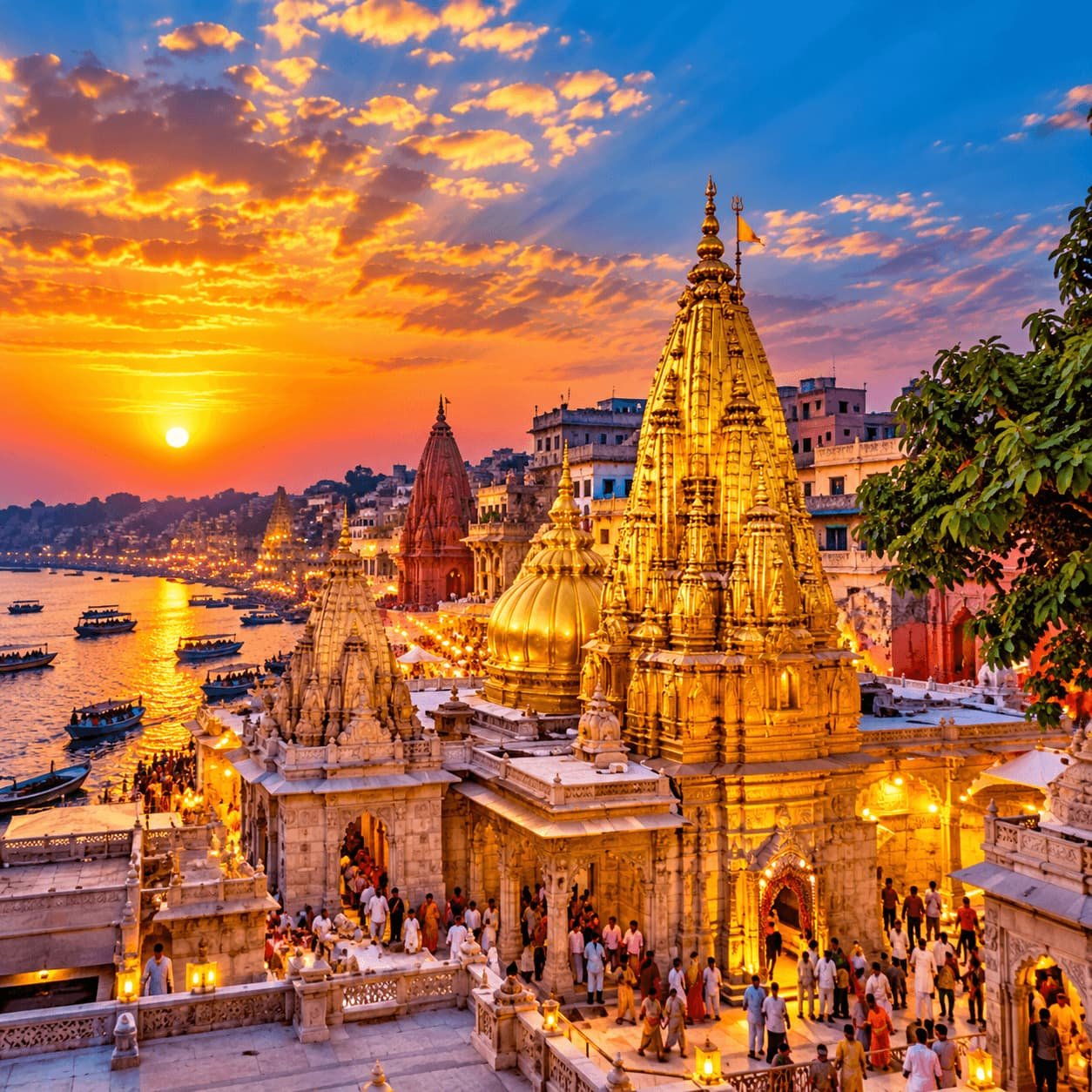
Varanasi is a city where spirituality runs in the veins of the streets – from the temple bells to the evening prayers by the River Ganga. But the soul of this city is encapsulated in one word – the Kashi Vishwanath Temple!
Dedicated to Lord Shiva and frequented by devotees, pilgrims and tourists from far and wide, visiting Kashi and the Kashi Vishwanath Temple offers a unique and powerful experience for any Hindu. From the temple’s unique position as one of the twelve Jyotirlingas of Lord Shiva to its rich history and striking architecture, Kashi Vishwanath Temple is an unparalleled and fascinating experience.
In this guide we explore the rich and unique history of the temple, its religious significance and important rituals, plus what you can expect in terms of darshan and the attractions nearby in Varanasi. We also share our essential travel tips to help you prepare for your visit.
Where Is Kashi Vishwanath Temple Located ?
The Shri Kashi Vishwanath Temple is located in the Indian city of Varanasi (or Banaras), Uttar Pradesh. The city falls under the jurisdiction of the Kashi region. The temple in particular is found in the old city of Varanasi, close to the western banks of the River Ganga. Narrow streets, lesser shrines, local markets and routes lead to the famous riverfront ghats.
The main deity worshipped at Kashi Vishwanath is Lord Shiva, known locally as Vishwanath / Vishweshwara. The name itself is a reference to the Lord of the Universe.
The temple is frequented by those who embark on a pilgrimage to Varanasi, and is also an important cultural monument for those who come to India for religious reasons.
Due to the temple’s location in the heart of Varanasi, it’s important to plan your trip and understand the current entrance and visitor arrangements ahead of your visit.
History of Kashi Vishwanath Temple
The history of Kashi Vishwanath Temple is intricately linked to the long and rich history of Varanasi – a city which has been the center of Hindu religion, scholarship and pilgrimage for centuries.
The current temple building is closely linked to Maharani Ahilyabai Holkar, the ruler of Malwa, who commissioned the construction of the temple in 1780. Ahilyabai’s role in Kashi Vishwanath’s development is one of the most celebrated chapters in the temple’s long history.
Throughout history, the temple and greater region underwent a cycle of construction and renewal. Historical accounts also tell of previous temple buildings and renovations, though much of this predates documented history.
As such, it’s important to differentiate between the temple’s established and documented religious tradition, and its much debated documented history of the current temple building.
Maharani Ahilyabai Holkar’s Contribution
Maharani Ahilyabai Holkar is known widely for her role in building and renovating numerous Hindu temples and pilgrimage sites. Kashi Vishwanath was one such temple which benefitted enormously from her contribution, and today her name is often linked to the foundation stone of this temple.
The Golden Temple
Kashi Vishwanath is sometimes referred to as the Golden Temple due to the architectural features of gold leaf which adorn the temple. The golden dome of the temple is particularly notable. This is traditionally attributed to a generous donation by the Maharaja of Punjab, Ranjit Singh, in the 19th century.
The golden features of Kashi Vishwanath Temple stand out against the surrounding buildings and narrow streets, marking it out as a particularly striking feature in the city’s architectural landscape.
The Kashi Vishwanath Corridor
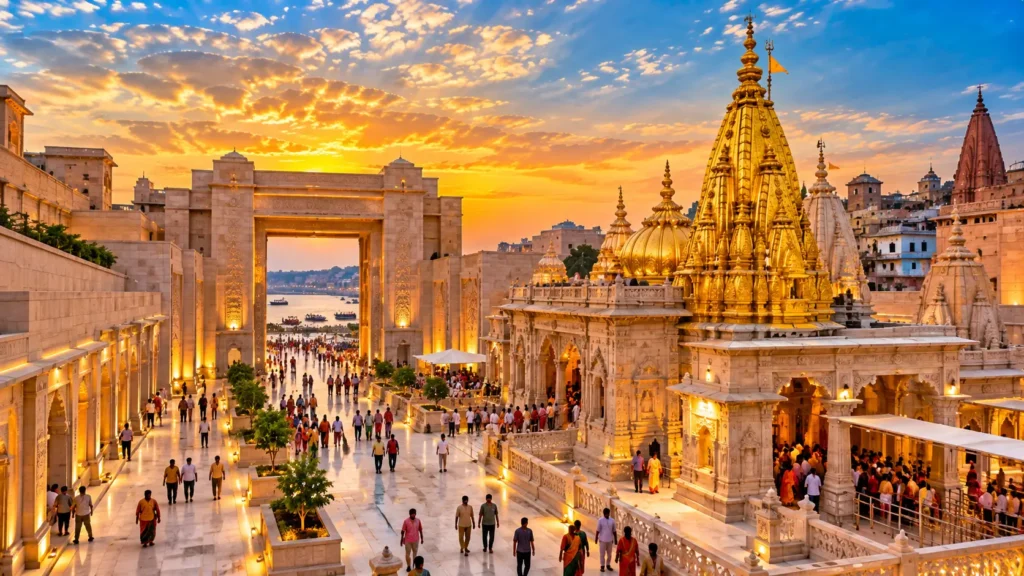
The Kashi Vishwanath Corridor is a recent addition to the temple which has fundamentally changed the visitor experience. Connecting the temple to the Lalita Ghat region on the banks of the River Ganga, the corridor has also created additional space around the temple for visitors to gather.
For the pilgrims, the corridor has changed the way in which they interact with the temple and surrounding region. As with all temple developments, it’s important to be aware of the entrance and visitor arrangements prior to your visit.
Historical note: The temple’s official portal provides detailed information on the history of the temple.
Spiritual Significance of Kashi Vishwanath Temple
Kashi Vishwanath Temple is one of the most revered Shiva temples in all of Hinduism. This is largely due to its deep spiritual connection to Varanasi as a holy city. As such, visiting Kashi is not only an interesting cultural experience, but a deeply spiritual one for many Hindus.
One of the Twelve Jyotirlingas
The temple’s religious significance is further enhanced by the fact that the shrine is one of the twelve Jyotirlingas of Lord Shiva. Jyotirlingas refer to the twelve shrines across India which are particularly sacred and where the deity can be seen in his fiery form. As such, each of these shrines have their own unique history, religious significance and devotee base.
The twelve Jyotirlinga shrines are found dotted across the Indian subcontinent, with Kashi Vishwanath being one of them. Many Hindus make it a point to visit all twelve Jyotirlingas in their lifetime, and as such, a visit to Kashi Vishwanath Temple is an important spiritual goal for followers of Lord Shiva.
Why Is Varanasi Sacred ?
Varanasi has a unique place in Hinduism as being one of the holiest cities in the religion. Sacred to Hindus and intimately linked to Lord Shiva, Kashi (as Varanasi is also known as) has a long and distinguished history as a religious and cultural center of India. The River Ganga has played an important role in the city’s development as a pilgrimage site.
The ghats which line the banks of the River Ganga in Varanasi have long been a place of spiritual and cultural significance. Pilgrims and devotees visit the ghats for aarti, bathing and ceremonies which have continued for centuries.
The temple and the River Ganga create a truly unique environment for spiritual and cultural practices, and many visitors to the temple plan their day around the temple’s darshan as well as a visit to the River Ganga and its cultural and religious practices.
As with all experiences, the spiritual significance of a visit to the Kashi Vishwanath Temple will be unique to the visitor. The combination of the temple’s spiritual, cultural and daily significance create an unforgettable impression which is cherished by many.
The Meaning of Darshan
In a Hindu temple, a darshan typically refers to the visual and spiritual experience of seeing the deity. At Kashi Vishwanath, this is achieved by visiting the sanctum of the temple and offering your prayers to Lord Shiva. Some also choose to partake in the evening aarti, depending on availability and arrangements.
Many visitors to the temple choose to visit the Kashi Vishwanath as part of a larger pilgrimage to northern India, or simply as a family visit to a temple which has great religious significance. Regardless of your reason for visiting, it’s important to note that the traditions of the temple are sacred to its visitors, and it’s important to be respectful and uphold the dignity of the temple and its visitors.
Architecture of Kashi Vishwanath Temple
Kashi Vishwanath is particularly famous for its golden domes and spire. The architectural style reflects a history of the present day temple, and the temple’s importance within the urban space of old Varanasi.
Unlike larger temple compounds which are built upon large expanses of land, the old temple is part of a tightly woven network of streets, shrines and religious places of worship which is part of the area’s historical significance.
This makes a visit to the temple even more special, as visitors are immersed in an environment where faith, trade and city life merge into one harmonious whole.
The Golden Domes and Spire
The temple’s golden features are some of the most famous visual motifs of the temple. Standing out amidst the city’s skyline, the view of the temple’s domes and spire are some of the most memorable photos that a visitor can take.
It should be noted, however, that the inner sanctums of the temple take precedence over any visual and photo opportunities. As such, it’s best to follow local instructions and temple rules regarding photography and access.
The Temple and Its Surroundings
The temple is located in one of the oldest parts of Varanasi, and as such the surrounding streets offer a unique blend of local shopping, devotion and convenience. Shops selling religious items, flowers, offerings, sweets and souvenirs can be found on the streets surrounding the temple. Smaller shrines and local eateries can also be found in the area.
The unique mix of the old city, devotion and the River Ganga creates a distinct environment which is not found anywhere else. If you’re a fan of exploring, make sure to take the time to visit the local neighborhood with respect rather than for a quick photo op.
Kashi Vishwanath Temple Darshan Timings
Darshan timings and schedules play an important role in a visit to Kashi Vishwanath Temple. The temple’s website has published the timings for darshan, aarti and other religious services in advance. These timings are subject to change on a day to day basis, depending on special days and events, crowd management and administrative requirements.
The following are examples of the major daily rituals, as per the temple’s published schedule:
| Ritual | Published schedule |
| Mangala Aarti | Approx. 3:00 AM – 4:00 AM |
| Bhog Aarti | Approx. 11:15 AM – 12:20 PM |
| Saptarishi Aarti | Approx. 7:00 PM – 8:15 PM |
| Night Shringar/Bhog Aarti | Approx. 9:00 PM – 10:15 PM |
| Shayan Aarti | Approx. 10:30 PM – 11:00 PM |
Important: These are sample timings published by the temple ahead of your visit. It is always best to check the exact timings and general visitor guidelines for your date of travel before you leave for the temple.
Which Is the Best Time to Visit ?
The best time to visit the temple largely depends on your priorities.
Early morning: Those who are looking for a less busy day may want to consider an early morning visit, though it’s important to note that special aarti arrangements may require separate booking.
Late morning or afternoon: This may be suitable for those who want to combine a visit to the temple with other sights and sounds of the city. Crowd levels can vary significantly.
Evening: An evening visit fits in well with a trip to the nearby River Ganga ghats and the city’s riverside activities.
No time is guaranteed to be less crowded, as festivals, weekends, holidays and special religious occasions can impact waiting times significantly.
If you have limited time in Varanasi, it’s best to check the schedule before choosing a hotel departure time.
How to Reach Kashi Vishwanath Temple
Varanasi is well connected to other major cities in India by air, rail and road. Your best option will largely depend on where you’re traveling from, your budget and time constraints.
By Air : Lal Bahadur Shastri International Airport serves Varanasi. You can reach the city by taxi or other local transport after landing at the airport. The time it takes you will depend on traffic and your destination in Varanasi. If you’re travelling during a major festival, it’s best to give yourself additional time.
By Train : Varanasi has excellent rail connectivity to major cities across India. Make sure to choose a station which is closest to your accommodation, as your final leg to the temple area may require you to take road transportation and/or walk, depending on current restrictions in place.
By Road : Varanasi is well connected by road to neighboring towns and cities. Travellers by private vehicle should make sure to choose a parking spot which is authorized. Vehicles may not be allowed to enter the temple directly due to local traffic and parking restrictions.
Local Transport : Auto rickshaws, taxis and other local transport can be used to get around the city. The final leg of your journey to the temple may require you to walk on foot, especially if you’re travelling with older family members or young children.
Places to Visit Near Kashi Vishwanath Temple
A visit to Kashi Vishwanath can be combined with a visit to some of the other important places of interest in Varanasi. The following attractions offer a unique insight into the city’s religious life, architecture and culture.
If you are interested in exploring more famous temples in India, read our guides to [Tirumala Venkateswara Swamy Temple] and [Jagannath Puri Temple] for more information about their history, spiritual significance and visitor experiences.
1. Dashashwamedh Ghat
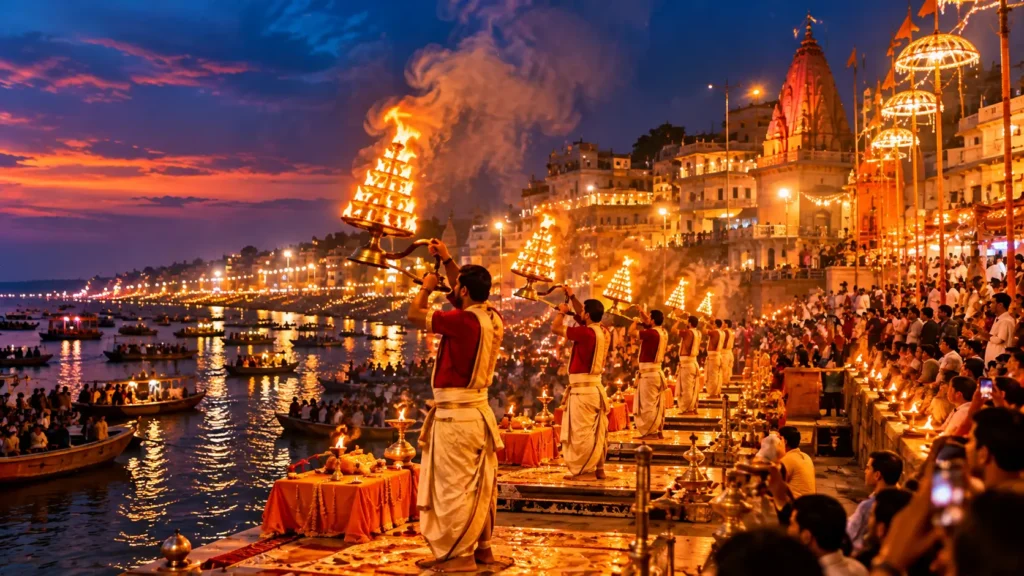
Dashashwamedh Ghat is one of the most well known ghats of the River Ganga in Varanasi. Many visitors flock to this riverfront area to experience the atmosphere and the famed Ganga Aarti ceremony, which is a unique cultural and religious experience for visitors.
There are large crowds which gather to witness the ceremony, so make sure to arrive early and follow local directions for access and safety. Keep in mind that the River Ganga is a sacred river which is frequented by locals and visitors to the city. Being respectful when taking photos or walking through ceremonial areas is strongly advised.
2. Annapurna Devi Temple
The Annapurna Devi Temple is dedicated to the goddess Annapurna, the provider of food. The goddess holds a special place in the hearts and minds of the people of Varanasi, and many visitors to the Kashi Vishwanath Temple make it a point to also visit this important temple in the region.
Make sure to check current access and opening times before your visit.
3. Kal Bhairav Temple
Kal Bhairav is a manifestation of Lord Shiva which is connected to protection and guardianship in Hindu mythology. The Kal Bhairav Temple is also an important site of pilgrimage for many Hindus who visit Varanasi.
Since this is a separate temple, plan your trip and travel time accordingly.
4. Assi Ghat
Assi Ghat is a popular riverfront destination in Varanasi. Visitors to this part of the city enjoy morning walks, cultural activities and spending time beside the Ganga. Depending on the day, there may be organized morning programmes or other activities.
The atmosphere in this part of the city is distinctly different from the narrow streets around the Kashi Vishwanath Temple.
5. Sarnath
Sarnath is an important Buddhist pilgrimage site located just outside the main city area. This is traditionally considered to be the site where Lord Buddha delivered his first sermon after attaining enlightenment. The archaeological ruins, museum and religious buildings in the area make for a fascinating visit for those who wish to experience India’s spiritual history.
If you wish to visit both Varanasi and Sarnath, make sure to allow sufficient travel time between the two.
Travel Tips for Visiting Kashi Vishwanath Temple
A little preparation goes a long way, especially if this is your first trip to Varanasi.
1. Check Official Darshan Information
Check the official darshan schedule and entry rules before your visit. Special days can have different arrangements. For official information, please visit the Shri Kashi Vishwanath Temple website.
2. Review Mobile Phone and Camera Rules
Electronic devices and personal items may be subject to restrictions within the temple premises. Do not assume that mobile phones, cameras or other items will be allowed inside. Check the latest instructions and make use of authorized storage facilities if required.
3. Wear Comfortable Clothing
Wear comfortable and respectful clothing which is appropriate for a religious place. You may need to walk or stand in a queue, so comfortable footwear can be useful for the journey. Follow the instructions about footwear when entering designated temple areas.
4. Keep Your Belongings Secure
Pilgrimage destinations can get busy. Carry only what you need, keep your valuables secure and be cautious when moving around narrow streets. If you are travelling with children or older family members, make sure to agree on a meeting point in case your group gets separated.
5. Allow Extra Time
Do not plan your schedule too tightly around the temple darshan. Crowd management, security checks, local traffic and festival arrangements can affect the length of your visit. An additional time buffer can help you enjoy the rest of your trip without unnecessary pressure.
6. Use Official Booking Channels
If you wish to attend a special aarti or use a ticketed darshan service, make sure to check the temple’s official booking system. Avoid using unverified agents or unofficial websites. Confirm the service, price and booking conditions before you pay.
7. Respect Local Religious Customs
Follow instructions from the temple staff and security personnel. Avoid pushing through queues, disturbing worshippers and taking photos where prohibited. Small acts of consideration help to preserve the experience for everyone.
8. Plan Your Riverfront Visit Separately
The temple and the River Ganga ghats are connected by the city’s sacred landscape, but they are two different attractions.
If you wish to see the Ganga Aarti, plan where you will watch it and how you will get there. Crowds can make your movement slow, so it’s always best to factor this in ahead of your visit.
Festivals Celebrated at Kashi Vishwanath Temple
Religious festivals play a significant role at Kashi Vishwanath Temple. They can also attract huge crowds of devotees who come to the temple from all across the country.
Maha Shivaratri
Maha Shivaratri is one of the most important festivals dedicated to Lord Shiva. Devotees observe prayers, fast and night long worship according to their traditions. At major Shiva temples, the festival can involve special rituals and increased activity of pilgrims.
If you plan to visit Kashi during the Maha Shivaratri, it’s best to check announcements well in advance. Accommodation and transport can become very competitive.
Shravan Month
The Hindu month of Shravan is particularly important for many devotees of Lord Shiva. During this period, pilgrims visit Shiva temples and observe religious practices. Crowd levels and temple arrangements can vary significantly from ordinary days.
Travellers should check current notices before making a booking.
Other Religious Occasions
Various Hindu festivals and special occasions are celebrated in Varanasi. The religious calendar of the city can affect temple schedules, riverfront ceremonies and transport arrangements.
Check official information close to your travel date instead of an old timetable.
Interesting Facts About Kashi Vishwanath Temple
Here are some interesting facts which help explain why the temple is so revered.
- Dedicated to Lord Shiva: The main deity is worshipped as Vishwanath or Vishweshwara.
- One of the twelve Jyotirlingas: The shrine holds a special place in Hindu religious tradition.
- Located in Varanasi: The temple is part of the sacred landscape of Kashi
- Present structure dates to 1780: The current temple building is associated with Maharani Ahilyabai Holkar.
- Known as the Golden Temple: Its gold features contribute to this name.
- Connected with the Ganga riverfront: The Kashi Vishwanath Corridor connects the temple area with Lalita Ghat.
- An important pilgrimage destination: Visitors come to the temple for worship, religious observances and cultural exploration.
Frequently Asked Questions About Kashi Vishwanath Temple
1. Where is Kashi Vishwanath Temple located?
Kashi Vishwanath Temple is located in Varanasi, Uttar Pradesh, India, in the historic area near the River Ganga.
2. Which god is worshipped at Kashi Vishwanath Temple?
The temple is dedicated to Lord Shiva, worshipped here as Vishwanath or Vishweshwara.
3. Is Kashi Vishwanath Temple one of the twelve Jyotirlingas?
Yes. The temple houses the Vishwanath Jyotirlinga, one of the twelve Jyotirlingas which are revered in Hindu tradition.
4. Who built the present Kashi Vishwanath Temple?
The present temple structure is attributed to Maharani Ahilyabai Holkar, who commissioned the construction in 1780.
5. What are the darshan timings at Kashi Vishwanath Temple?
The temple publishes daily darshan and aarti schedules. Timings and visitor arrangements may vary, so make sure to check the temple’s website ahead of your visit.
6. Is there a dress code for Kashi Vishwanath Temple?
Visitors should wear respectful clothing which is appropriate for a religious place. Check the current temple instructions for any specific requirements.
7. Can I take my mobile phone inside the temple?
Electronic devices may be restricted inside the temple premises. Check the latest instructions before you arrive and make alternative arrangements if required.
8. How can I book aarti or special darshan?
Check the official Shri Kashi Vishwanath Temple website for available booking services, current prices and conditions.
9. Which places can I visit near Kashi Vishwanath Temple?
Popular local or city attractions include Dashashwamedh Ghat, Annapurna Devi Temple, Kal Bhairav Temple and Assi Ghat. Sarnath is another important destination outside the central temple area.
Final Thoughts
The Kashi Vishwanath Temple is a sacred site that goes beyond being a famous landmark in Varanasi. It is a living testament to the devotion of millions of followers and a popular destination for those seeking to experience India’s spiritual heritage.
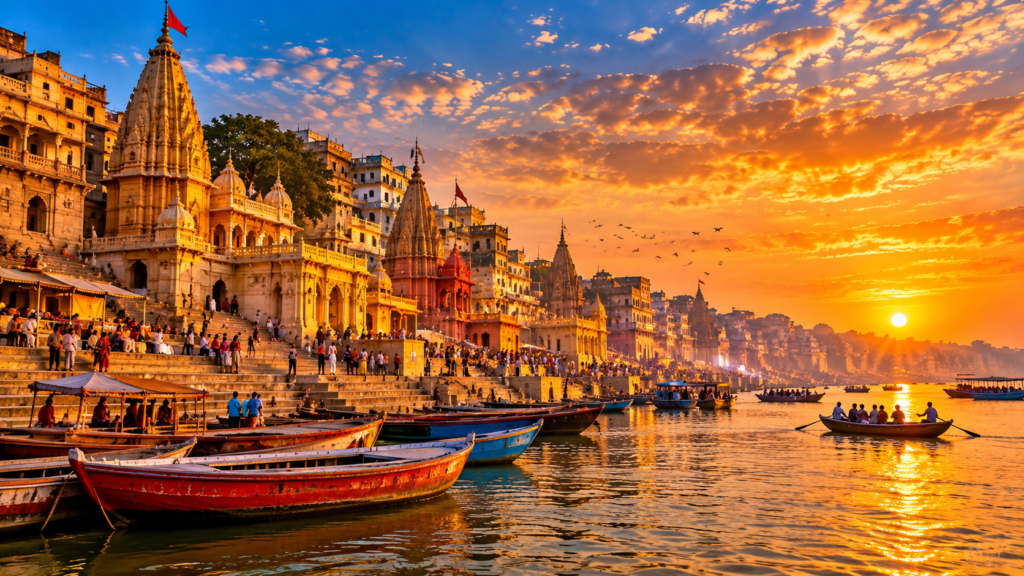
With its rich history, golden architecture and prime location beside the River Ganga, this temple offers a unique window into Indian culture and religion.The temple’s surroundings provide an immersive experience – from the local streets to the nearby shrines and riverfront rituals, all of which contribute to a deeper understanding of Varanasi.
If you’re planning a pilgrimage, be sure to research darshan details, restrictions and time constraints in advance. With proper preparation and respectful attitude, your visit to this holy temple can become a truly meaningful adventure.
No matter if you’re a devout follower or a curious tourist, the Kashi Vishwanath Temple is sure to leave a lasting impression on you – an experience that will stay with you for years to come.
Plan your own temple visit today and discover more fascinating facts, pilgrimages guides and historical insights at Temple Mysteries .
References for Fact-Checking
- Temple history and official information: Shri Kashi Vishwanath Temple Official Website
- Official darshan and aarti schedule: Temple Daily Schedule
- Kashi official tourism portal: Kashi Official Web Portal
- Kashi Vishwanath Temple: History, Significance and Complete Travel Guide
- Jagannath Puri Temple Travel Guide In 2026
- Jagannath Puri Temple Secrets & Facts
- 10 Hidden Mysteries of Tirumala Temple-Travel Guide Telugu